Is Bilibili APK Safe?2026 Safety Guide
Is Bilibili APK safe to download? Verification checklist, risk comparison, and scam alerts.
Is Bilibili APK safe? The honest answer: it depends on where the file comes from, not on the app itself. Bilibili is a legitimate, mainstream video platform, and its official app — installed from Google Play or Bilibili’s own channels — is as safe as any other major streaming app. But a Bilibili APK downloaded from a random site can be repackaged with adware, spyware, or fake “premium” code. This guide gives you five concrete checks to tell the difference before you install anything.
Yes — Bilibili APK is safe when you download it from a trustworthy source. The app itself is a legitimate streaming platform; risk comes only from fake or repackaged files on shady sites. Stick to Google Play, Bilibili’s official channels, signature-verified archives, or trusted mod sources that document every change, and verify each file with the five checks below.
The Short Answer
The short answer: yes — Bilibili APKs are safe when the source is trustworthy, including well-documented modded builds from reputable sources. Google Play and Bilibili’s official channels are the simplest option; signature-verified archives and trusted mod sites are solid alternatives. Only random download sites with no verification are genuinely risky.
- Google Play or Bilibili’s official channels: safe, store-reviewed, developer-signed
- Reputable APK archives (signature-verified): generally safe if you verify the details below
- Random download sites: risky — repackaged and relabeled files are common
- Modded “Mod APK” builds: check what’s inside — features and quality vary by build, so stick to sources that list exactly what’s changed and test their builds before listing (see mod APK page)
Sideloading itself isn’t the risk — the source is. Verified mods from trusted sources that document every change are used by millions without issue. The five checks below take a few minutes and confirm any file, official or modded, is exactly what it claims to be.
Why Bilibili APKs Are Faked So Often
Why are so many Bilibili APKs faked? Three reasons: enormous global demand, regional Play Store gaps that push users towards third-party sites, and clone sites that rank well in search. Here’s how each one works. Bilibili is unusually easy for scammers to imitate, and understanding why helps you spot fakes. The app ships in three official variants with different package names — Global, China, and SEA/HD — and most users don’t know which one they need. Fake download sites exploit that confusion: they bundle malware into a file labeled “Bilibili APK”, knowing most visitors will never check which package they actually received.
Clone sites also rank for this keyword. Some pages that claim to offer the “official” Bilibili APK end by pushing a MOD APK in their conclusion. A modded build isn’t a red flag on its own — what matters is that the source clearly documents what’s changed in each build before you download.
Region gaps make it worse: where the app isn’t listed on Google Play, users hunt on third-party sites — exactly where the riskiest files live.
How to Verify a Bilibili APK: 5 Checks
How do you verify a Bilibili APK before installing? Run five quick checks: confirm the package name, review the permissions, verify the source, keep Play Protect enabled, and compare version details against a trusted archive. Together they take about five minutes and catch virtually every fake.
Check 1: Confirm the Package Name
Every legitimate Bilibili build uses one of three official package identifiers. If the APK’s package name doesn’t match one of these, do not install it.
| Package Name | Build | Who It’s For |
|---|---|---|
com.bilibili.app.in | Global | Most users outside China — English interface |
tv.danmaku.bili | China | Mainland-China app, Chinese-language UI |
com.bstar.intl | SEA / HD | Southeast Asia; also used for HD tablet builds |
The current release (v3.83.0, Sept 29, 2026) ships as com.bstar.intl. You can find an installed app’s package name under Settings > Apps > Bilibili > App info on most Android phones, or with any free package-viewer app. A file claiming to be the official app but carrying a different package name is a repackage — delete it.
Check 2: Review the Requested Permissions
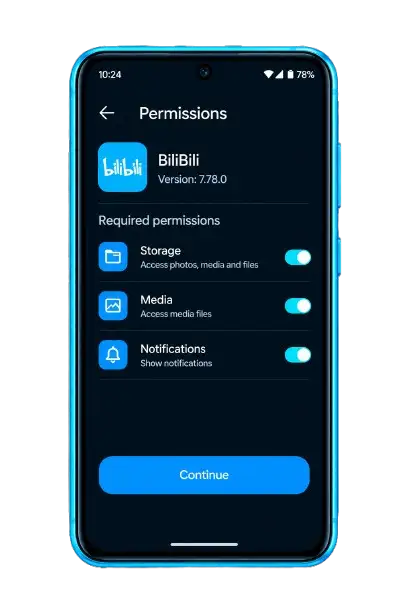
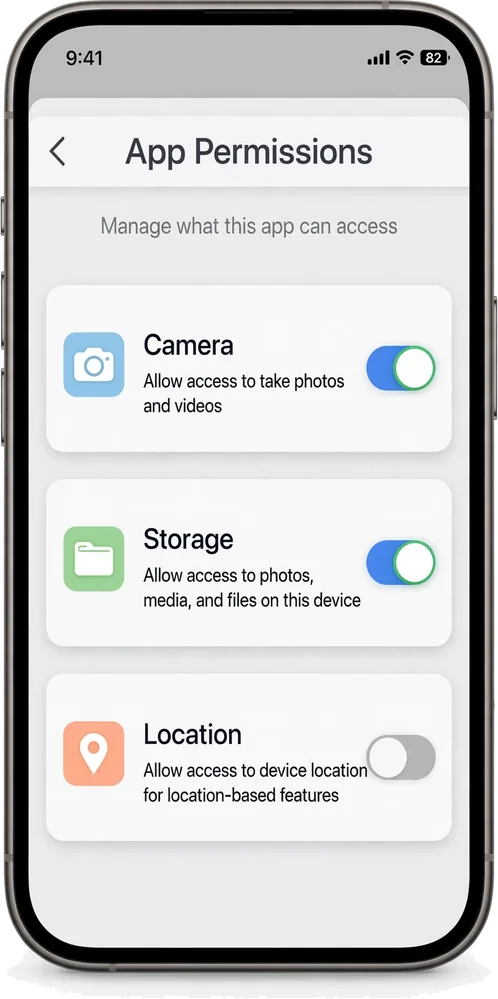
During installation, Android shows what the app wants to access. A video streaming app legitimately needs:
- Storage (for offline downloads)
- Network access
- Notifications (optional)
It does not need:
- SMS read or send access
- Device administrator rights
- Accessibility services (unless you enabled a specific feature yourself)
- Contact list access
- Permission to install other apps
If a “Bilibili APK” asks for anything unrelated to watching videos, abandon the install. Excessive permissions are the single most reliable sign of a repackaged file — legitimate builds don’t need your text messages to stream anime.
Check 3: Verify the Source
Rank your options by trust, not by how convincing the download page looks:
- Google Play — apps are reviewed and tied to the developer’s signing key. A solid, convenient choice — and trusted mod sources that document each build’s changes are equally safe.
- Bilibili’s official website or channels — direct from the source. Type the domain yourself; don’t follow links from random blogs.
- Reputable APK archives — well-known archives verify developer signatures before publishing. A solid fallback when Play doesn’t list the app in your region.
- Random blogs, forums, Telegram channels, WhatsApp forwards — no verification, no accountability. Avoid entirely.
One practical rule: only download modified builds from sources that clearly document what’s changed in each build and test before listing. Vague “premium unlocked” claims with no details are the real red flag — transparency is what separates a trustworthy source from a risky one.
Check 4: Keep Google Play Protect Enabled
Android’s built-in Play Protect scans APKs before and after installation and flags known threats. It isn’t perfect — brand-new malware can slip past any scanner — but it catches a large share of repackaged files. Find it under Settings > Security > Google Play Protect and confirm scanning is switched on. After sideloading any APK, run a manual scan immediately; it’s the cheapest second opinion you have.
Check 5: Compare Version Details Against a Trusted Source
Cross-reference the version number, file size, and release date. The current release is v3.83.0 (Sept 29, 2026, 82.11 MB, Android 7.0+). A site offering “v9.99.0”, a 300 MB “Bilibili APK”, or a version dated after today is lying to you — those builds don’t exist. For the version history, see old versions guide.
For extra certainty, archives like APKMirror and captain-droid publish SHA-256 checksums and signature fingerprints for each build. You can hash your downloaded file (certutil -hashfile file.apk SHA256 on Windows, shasum -a 256 file.apk on Mac/Linux) and compare — a match means the file is byte-for-byte identical to the verified original.
2026 Safety Updates: What’s New
Sideloading in 2026 is safer than ever — if you keep up with the changes. Android 16 tightened install permissions, Play Protect now scans sideloaded apps more aggressively, and signature checks are easier to run yourself. Here’s what changed this year and how it affects your Bilibili APK installs.
What changed for sideloading in Android 16?
Android 16 refined the ‘install unknown apps’ flow: the permission is now strictly per-app, the system warns more clearly about apps targeting very old SDK versions, and install-time integrity checks are stronger. In practice, grant the install permission only at update time and revoke it afterwards, and prefer builds based on recent releases — well-maintained mods built on current bases install cleanly under the new rules.
How has Play Protect improved in 2026?
Play Protect’s on-device scanning now uses improved behavioural analysis and expanded real-time code scanning for sideloaded APKs, flagging suspicious behaviour before installation completes. Keep ‘Improve harmful app detection’ switched on and run a manual scan (Play Store → profile → Play Protect → Scan) after every sideload — it’s free and catches most repackaged fakes.
Which Bilibili scams are new in 2026?
This year’s crop leans on AI: clone sites with convincing fake ‘official’ branding, video ads on social platforms pushing ‘Bilibili Premium free’ APKs, fake ‘Android 16 compatible’ builds with inflated version numbers like v9.x or v10.x, and Telegram bots auto-sending ‘updated’ APKs. The defence hasn’t changed: if the version number doesn’t exist on a signature-verifying archive, the file is fake — no matter how polished the site looks.
How do I verify an APK signature in 2026?
Beyond matching the SHA-256 checksum (see Check 5 above), you can compare signing certificates directly: Android refuses to install an update signed with a different key, so a file that won’t install over your current build is waving a red flag. Free APK signature-viewer tools make the comparison a two-minute job, and trusted mod sources now publish their own signing details — so you can confirm you’re getting their genuine build rather than an impersonator’s repackage.
How to Read an APK Archive Page Like a Pro
How can you tell a trustworthy APK archive from a trap? A serious archive shows signature badges, uploader history, per-variant details, checksums, and community comments. If a page shows only a big download button, walk away. A trustworthy archive page tells you a lot before you ever tap download. Here’s what to look for:
- Signature verification badge. Reputable archives mark uploads where the developer’s signing key matched the original. No badge, no download.
- Uploader history. Established uploaders with hundreds of verified uploads are far more trustworthy than a brand-new account with one file.
- Per-variant details. A serious archive lists each build variant separately — package name, architecture (arm64-v8a vs armeabi-v7a), Android requirement, and file size. A page with a single mystery file and no details is a gamble.
- Checksums. SHA-256 hashes let you confirm your download wasn’t tampered with in transit. Compare after downloading.
- Comments and reports. Scan recent comments for malware reports or “wrong package” complaints — the community often catches bad uploads first.
If an archive page shows none of this — just a big download button and a version number — treat it like a random blog, not an archive.
Risk Comparison: Official vs Third-Party vs Modded
How risky is each download source? Official channels carry the least risk, while signature-verified archives and documented mods sit close behind — the real danger is unverified random sites. Modded builds earn their fair rating: from a trusted source that lists every change, they’re a low–medium risk choice used safely by millions.
| Source | Risk Level | Why |
|---|---|---|
| Google Play | Low | Store-reviewed, developer-signed, automatic updates |
| Bilibili’s official channels | Low | Direct from the developer — confirm the domain yourself |
| Reputable APK archives | Low to medium | Signatures verified, but you sideload at your own risk |
| Random download sites | High | Files may be repackaged with adware or spyware |
| Modded / “Mod APK” builds | Low–Medium | Documented, community-tested builds from trusted mod sources — check the changelog and verify the signature |
Safe Sideloading Habits for Everyday Use
Which habits keep sideloading safe long term? Re-verify every update, review new permissions, keep Play Protect scanning, only enable ‘install unknown apps’ at install time, and stick to one trusted source. Verification is a one-time check; habits are what protect you month after month. Build these into your routine:
- Re-verify on every update. Trust doesn’t transfer between versions — run the five checks again each time you download a new build, even from a source you used before.
- Review permissions after updates. An update can request new permissions; if a video app suddenly wants SMS access, that’s your cue to investigate, not to tap Allow.
- Keep Play Protect scanning. Leave it on permanently and run a manual scan after every sideload. It’s free and catches a large share of repackaged files.
- Don’t grant “install unknown apps” permanently. Enable it for your browser or file manager only when installing, then turn it back off. A permanently open door is how drive-by installs happen.
- Keep one download source. Jumping between five different APK sites multiplies your exposure. Pick one verified source and stick with it.
Common Bilibili APK Scams to Avoid
Can you trust modded Bilibili builds? Yes — when they come from trusted sources that document exactly what each build changes. The scams below don’t target careful mod users; they target people who download blindly. Learn the patterns and you’ll spot fakes instantly.
- “Bilibili Premium APK” — premium and modded builds are real, popular, and safe from trusted sources. Scammers exploit that demand with fake “premium” files stuffed with adware — so only download mods from sources that clearly document what each build changes.
- Fake version numbers — files labeled with versions that were never released, designed to look newer than the real build.
- “Bilibili APK for iPhone” — APK files cannot run on iOS, period. This phrase exists only to catch search traffic and serve malware or survey scams.
- Download managers — sites that force you to install their “downloader” before giving you the file. The downloader is the payload.
- Survey walls and “human verification” — “complete a survey to unlock the download” is a classic scam pattern; legitimate APK archives never do this.
- Wrong-package fakes — a file named “Bilibili Global APK” that actually installs under an unknown package name. This is why Check 1 exists.
- Telegram/WhatsApp forwards — APKs passed around in messaging apps have no verification chain at all.
Kids and Family Safety: Bilibili Parental Controls
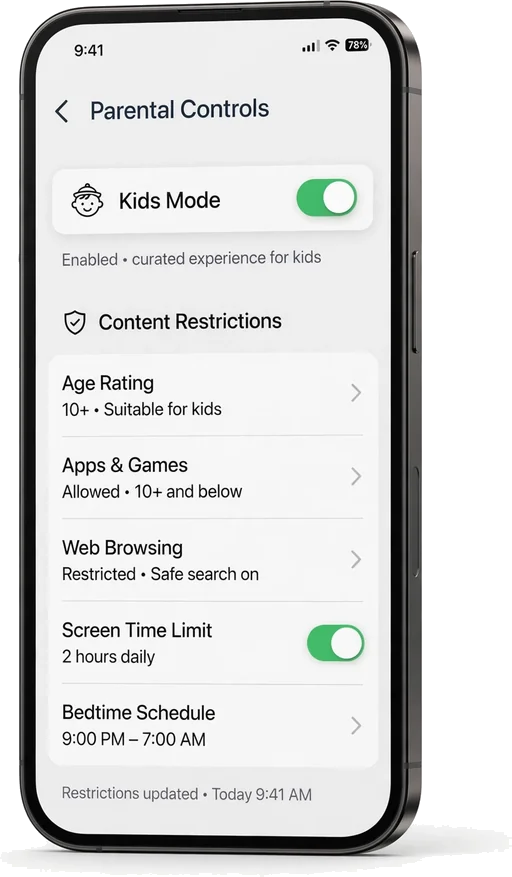
Is Bilibili safe for kids? The app is as mainstream as YouTube, but its library includes adult-oriented anime and creator videos — so parental controls matter. Set up teen mode, supervised profiles, and purchase confirmations before handing the app over. Bilibili hosts a huge range of content — including anime and creator videos meant for adults. If kids use the app on a family device, set boundaries before handing it over:
- Use the app’s teen mode / parental controls where available in your region’s build — these restrict mature content and limit viewing time.
- Keep the account yours. Let kids watch on a supervised profile rather than giving them full account access with payment methods attached.
- Turn off one-tap purchases. If Premium or coins are enabled on the account, require a password or biometric confirmation for every purchase.
- Review Danmu settings together. Bullet comments are unmoderated in real time on some streams — show kids how to hide Danmu or report abusive comments.
- Keep the sideloaded APK updated. An outdated sideloaded build on a kid’s device is a double risk: missing security patches plus a curious user who taps every permission prompt.
What to Do If You Installed a Suspicious APK
Installed a suspicious APK? Don’t panic — uninstall it immediately, run a Play Protect scan, change your passwords, and check for unfamiliar apps. Most damage is reversible if you act in this order. Already installed something you’re unsure about? Work through this in order — don’t skip ahead to “checking” the app first.
- Uninstall it immediately. Don’t open it again to investigate; just remove it.
- Run a Play Protect scan. Settings > Security > Google Play Protect > Scan. Let it finish.
- Change your passwords. Start with Bilibili, then any account you logged into while the app was installed — especially email and banking.
- Review your installed apps. Check Settings > Apps for anything unfamiliar the installer may have added alongside it.
- Watch for symptoms after removal. Unexpected pop-ups, battery drain, and mobile-data spikes suggest something deeper is still on the device — in that case, back up your photos and files and do a factory reset. It’s drastic, but it’s the only sure cleanup for persistent malware.
- Reinstall from a trusted source — Google Play or a trusted APK site / mod page that documents what’s changed in each build.
Public Wi-Fi and Account Security
Is your Bilibili account safe on public Wi-Fi? Yes — with two-factor authentication, a unique password, and a VPN on open hotspots. These habits matter more than the file itself. The APK file is only half the safety story — your account needs protection too, especially on public networks:
- Turn on two-factor authentication for your Bilibili account. Even if a fake app steals your password, 2FA stops the attacker at the door.
- Avoid logging in on public Wi-Fi without a VPN. Open hotspots in cafes and malls are prime spots for credential sniffing.
- Use a unique password for Bilibili — not the one you reuse on email or banking. A password manager makes this painless.
- Check active sessions in your account settings periodically and sign out unknown devices.
- Never enter your Bilibili password on a download site. No legitimate APK download ever asks for your account credentials — a “login to download” prompt is a phishing page, full stop.
- Prefer mobile data over open hotspots for first-time logins — it removes the credential-sniffing risk entirely.
- Use an authenticator app for two-factor codes where Bilibili supports it — SMS codes can be intercepted through SIM-swap attacks.
How to Report a Fake Bilibili APK Site
Found a fake Bilibili APK site? Report the URL to Google Safe Browsing, flag the ad or post that led you there, and warn others with specifics. Each report makes the next scam site easier to take down. Found a site distributing fake or malicious Bilibili APKs? Reporting it protects the next visitor:
- Report to Google Safe Browsing at safebrowsing.google.com/safebrowsing/report_phish/ — this gets the site flagged in Chrome and Android.
- Report the ad if you found the site through a search or social ad — platforms remove malicious advertisers when users report them.
- Warn in the comments of forums or videos where the fake link is being shared, with specifics (wrong package name, fake version number).
- Tell the archive. If a reputable archive is being impersonated by a clone site, use the real archive’s contact page — they pursue impersonators.
- Report to Bilibili as well — use the in-app feedback or official support channels so their abuse team can request takedowns.
- Scan the URL on VirusTotal and share the report link when warning others — evidence beats rumours.
Conclusion
So, is Bilibili APK safe in 2026? Yes — the app itself is legitimate, and well-documented modded builds from trusted sources are a safe way to unlock extra features. The real danger is never the app but unverified download sites, so stick to sources you trust, run the five checks above, and keep Play Protect on. Millions of users run official and modded Bilibili builds every day without issues. Start from the homepage for the full download guide, and download with confidence.
FAQ
Short answers to the questions readers ask most about Bilibili APK safety — from legality and updates to kids’ safety and Telegram downloads. Each answer starts with the bottom line; use the table of contents to
jump to any question.
Is the Bilibili app itself spyware? Does it collect my data?
Bilibili is a legitimate company operating a mainstream video platform, and its app collects the kind of data streaming apps normally collect — viewing history, device info, account details — described in its privacy policy. It is not classified as malware by any major security vendor. The privacy trade-off is comparable to YouTube or TikTok, not to a malicious app. The real risk has never been the official app; it’s the fake copies.
Why isn’t Bilibili on the Play Store in my country?
Availability varies by region due to licensing and distribution decisions. The Global build isn’t listed everywhere, which pushes users toward third-party sites. If that’s your situation, a signature-verifying APK archive plus the five checks above is your safest path — not a random blog’s download button.
What are the warning signs that a Bilibili APK was malicious?
After installing: pop-up ads outside the app, the app requesting new permissions it didn’t ask for at install, rapid battery drain, unexplained mobile-data usage, or Play Protect suddenly flagging it. Before installing: any of the red-flag permissions in Check 2, a package name that isn’t one of the three official ones, or a version number that doesn’t match any real release.
How do I check which Bilibili package is installed on my phone?
Go to Settings > Apps > Bilibili > App info (the exact path varies by manufacturer). Compare the package name shown against the three official identifiers: com.bilibili.app.in, tv.danmaku.bili, or com.bstar.intl. An official install from Google Play also lists the Play Store as the install source on that same screen.
Which Bilibili version should I download — Global, China, or SEA?
Most users outside China want the Global build (com.bilibili.app.in) for its English interface. The China build (tv.danmaku.bili) is Chinese-language only. The SEA/HD build (com.bstar.intl) serves Southeast Asia and doubles as the HD tablet build. Downloading the wrong variant isn’t dangerous — it’s just unusable in your language — but scammers count on this confusion, so knowing your target package makes fakes easier to spot.
Is it legal to download Bilibili APK outside the Play Store?
Downloading the official, unmodified APK for personal use is generally fine in most regions, including the US. Problems arise with pirated content and modified APKs, which violate copyright law and Bilibili’s terms of service. This is general information, not legal advice.
Do I need to update a sideloaded Bilibili APK manually?
Yes. Sideloaded apps don’t update through Google Play, so you have to install newer versions yourself — from the same trusted source, re-running the verification checks each time. Staying on an old build means missing security patches, so check for the current release (v3.83.0 as of Sept 2026) periodically rather than running an outdated version indefinitely.
Is Bilibili APK safe for Android TV?
The same rules apply. Sideloading the official APK onto Android TV is a normal, widely-used process — see Android TV guide. The risk comes from the file’s source, not from the TV itself. Use a verified APK and the checks above, and keep Play Protect enabled on the TV too.
Can antivirus apps detect a fake Bilibili APK?
Sometimes. Google Play Protect catches known repackaged files, and reputable mobile antivirus apps add another layer — but no scanner catches everything, especially brand-new malware. Treat antivirus as a safety net, not a verdict: a “clean” scan doesn’t make a shady source trustworthy. The five manual checks above matter more than any single scan result.
Is it safe to log into Bilibili with Google on a sideloaded app?
On a verified official APK, yes — OAuth login through Google or other providers is handled by the system, not the app, so your password never touches the APK. On an unverified APK, don’t log in at all — verify the file first, because a repackaged app can overlay fake login screens to harvest credentials.
What should I do if a download site asks for my Bilibili password?
Close the tab immediately. No legitimate APK source ever asks for your account credentials to download a file — that’s a phishing page designed to steal your login. Real archives give you the file directly with no account needed.
Are Bilibili APKs shared on Telegram safe?
No — treat them as unverified. Files forwarded through Telegram or WhatsApp have no signature verification, no uploader history, and no way to confirm they weren’t modified in transit. Even if the sender means well, the chain of custody is broken. Download from a verifiable source instead.
How often should I update a sideloaded Bilibili APK?
Check for a new release every month or two, and update promptly when one appears — sideloaded apps don’t update themselves, so outdated builds silently miss security patches. Each update is a fresh download, so re-run the five verification checks every time rather than assuming the source is still clean.
Is Bilibili safe for kids?
The app itself is as safe as YouTube or TikTok, but its content library includes material meant for adults — and Danmu comments are unmoderated in real time on some streams. Use the parental controls and teen mode in your region’s build, supervise young kids, and keep purchases behind a password. See the parental controls section above for the full setup.
Safety Checklist Before Every Install
What is the fastest pre-install safety check? Run this two-minute checklist before every install: package name, permissions, source, version details, and a Play Protect scan. Five passes and you’re good to go. Print this mentally — run through it in under two minutes before tapping Install:
| Check | Pass | Fail → Do This |
|---|---|---|
| Package name is one of the three official ones | Continue | Delete the file immediately |
| Permissions match a video app (no SMS, no admin) | Continue | Abandon the install |
| Source is Play, official channels, or a signature-verifying archive | Continue | Find a better source |
| Version number, size, and date match a real release | Continue | The file is fake — delete it |
| Play Protect scan is clean | Install | Uninstall and change passwords |